| .:::: JOURNAL RANK ::::. |
|---|
Submissions
Submission Preparation Checklist
As part of the submission process, authors are required to check off their submission's compliance with all of the following items, and submissions may be returned to authors that do not adhere to these guidelines.- The submission has not been previously published, nor is it before another journal for consideration (or an explanation has been provided in Comments to the Editor).
- The submission file is in OpenOffice, Microsoft Word, RTF, or WordPerfect document file format.
- Where available, URLs for the references have been provided.
- The text is single-spaced; uses a 12-point font; employs italics, rather than underlining (except with URL addresses); and all illustrations, figures, and tables are placed within the text at the appropriate points, rather than at the end.
- The text adheres to the stylistic and bibliographic requirements outlined in the Author Guidelines, which is found in About the Journal.
- If submitting to a peer-reviewed section of the journal, the instructions in Ensuring a Blind Review have been followed.
Author Guidelines
Journal of Islamic Economics and Social Sciences (JIESS) welcomes original research articles and critical literature reviews on primary studies at Islamic Economics (Management & Business, Accounting, Banking, Finance, Marketing, and Entrepreneur) and Social Sciences (Tourism, Culture, Psychology, Education, and Sociology) from an Islamic perspective for initiating the development of global economic advantages. JIESS is dedicated to providing an intellectual space of scholarly discussion on how Islamic economics is able to create the new global formation of Islamic economics, business, and similar issues. Each manuscript should explain its contribution to scholarship, professional practice, or public policy.
Write the manuscript in clear academic English and proofread it before submission. Prepare the manuscript using the JIESS Manuscript Template. See the Manuscript Type policy for requirements specific to each article category.
Manuscript Requirement
| Element | Requirement |
|---|---|
| File and page layout | Prepare an editable Word manuscript (.docx) of 7–15 pages. Use A4 paper, a single-column layout, and the page settings in the English template. |
| Article title | Use a concise, informative title of no more than 15 words. Format it in centered, bold, 15 pt Times New Roman. |
| Author details | Provide each author’s full name without academic or professional titles. Use bold, 10 pt Times New Roman for names and follow the template’s 9 pt format for affiliations and email addresses. Identify the corresponding author in OJS. |
| Abstract and Abstract | Provide an English abstract and its Indonesian counterpart. Each should be a single paragraph of no more than 200 words, set in 10 pt Times New Roman with single spacing. Summarize the objective, data or materials, methods, principal findings, and conclusion. The abstract should stand on its own and contain no citations. |
| Keywords | Provide five keywords or short phrases in English and their Indonesian equivalents. Choose terms that describe the subject and key concepts of the study. |
| Main text | Use 12 pt Times New Roman, single spacing, justified alignment, and a 1.27 cm first-line paragraph indent. Use bold uppercase for main headings and bold sentence case for subheadings. |
Leave the article history, DOI, volume, issue, and publication page numbers for the editorial office to complete.
Manuscript Structure
Introduction. Define the research problem, establish its relevance, identify the gap in existing scholarship, and state the research objective or question. Explain the contribution the article makes to the field.
Literature Review. Synthesize relevant theoretical and empirical studies. Use the literature to justify the conceptual framework and develop hypotheses, propositions, or analytical questions where appropriate.
Method. Describe the research design, data sources, study period or setting, selection of the sample or participants, and analytical procedures. Explain how key variables were measured or how qualitative evidence was interpreted and validated, as applicable. For literature reviews, justify the review approach and explain how sources were identified, selected, and synthesized. For systematic and scoping reviews, report the search sources, search terms, eligibility criteria, and screening procedures in enough detail for readers to assess the review.
Results and Discussion. Present the evidence in the order of the research questions or themes. Explain what the findings mean, how they relate to prior studies, and what implications the evidence supports. Literature reviews should identify patterns, inconsistencies, and gaps across studies and assess the strength of the available evidence.
Conclusion. Answer the research questions and summarize the contribution supported by the findings. State the study’s principal limitations and identify implications or directions for further research where appropriate.
Acknowledgments and declarations. Where applicable, identify funding sources, acknowledge contributors, disclose competing interests, report on using AI generative tools, and report ethics approval, informed consent, and safeguards for confidential data.
References. List every source cited in the manuscript and check that each entry has a corresponding in-text citation.
Tables, Figures, and Equations
- Number tables and figures separately in the order they are first cited. Place each near its first mention in the text, with a descriptive title above and the source or explanatory notes below. Use 12 pt bold Times New Roman for titles and 11 pt for source notes.
- Prepare tables as editable text. Use horizontal rules where needed, omit vertical rules, and define abbreviations, units, and statistical symbols in the notes.
- Use legible figures and label axes, units, and legends where applicable. Credit reproduced or adapted material and obtain permission when required.
- Use an editable equation tool. Define symbols at first use and number equations consecutively when the text refers to them. Align equation numbers at the right margin.
Citations and References
Use APA Style for author–date citations and the reference list. Use a reference manager such as Zotero, Mendeley, or EndNote, and check the generated entries against the original sources.
- Prioritize primary research published within the previous five years. Cite earlier works where they establish foundational theory or provide relevant evidence.
- For direct quotations, give the author, year, and page number or another locator.
- Arrange references alphabetically by the first author’s surname. Use 12 pt Times New Roman, single spacing, and the hanging indent in the template.
- Include the DOI as an
https://doi.org/link when available. Provide a stable URL where appropriate for sources without a DOI.
Journal article format
Author, A. A., & Author, B. B. (Year). Title of the article. Journal Title, volume(issue), page range. DOI URL
Book format
Author, A. A. (Year). Title of the book (Edition, if applicable). Publisher.
Guidelines for Submission and Peer Review
- Check originality and authorship. Submit original work that is free from plagiarism, fabricated or falsified data, and duplicate publication. Confirm that all listed authors approve the submission and that the manuscript is submitted exclusively to Journal of Islamic Economics and Social Sciences (JIESS) during consideration. Disclose related publications and overlapping material in the comments to the editor.
- Prepare the manuscript for blind review. Remove author names, affiliations, contact details, identifying acknowledgments, and identifying information in the file properties from the review copy. Enter the full author details in OJS.
- Submit through OJS. Log in or register, then open the Submissions page. Complete the checklist, upload the manuscript, and enter the title, abstract, keywords, and contributor details.
- Respond to editorial requests. The editorial team screens submissions for fit, compliance, and scholarly quality before assigning eligible manuscripts to reviewers. If revisions are requested, upload the revised manuscript and a point-by-point response explaining how each comment was addressed.
Manuscripts can be submitted by the author to the Journal of Islamic Economics and Social Sciences (JIESS)'s Editor Team by visiting the following URL address:
http://publikasi.mercubuana.ac.id/index.php/jiess/about/submissions#onlineSubmissions
All manuscripts are reviewed anonymously by reviewers who are appointed by the editors according to their area of expertise. Authors are given the opportunity to make improvements/revisions of the manuscript based on recommendations/suggestions from reviewers or editors. The certainty of loading or rejection of the manuscript will be notified in writing or by e-mail.
Pre-print checking and editing are done by the editor and/or by involving the author. The pre-printed article publishing process can be canceled by the editor if there are known problems.
Everything related to licensing the citation or use of computer software for making manuscripts or other matters relating to intellectual property rights carried out by the author of the article, the following legal consequences that may arise because of it, become the full responsibility of the author.
For further details, consult the journal’s Publication Ethics and Review Process Policy.
Sample Manuscript Format
This sample illustrates the structure and formatting of a research article. The study and findings are hypothetical. Replace bracketed text with information from your own study and apply the formatting in the JIESS Manuscript Template.
Optimization of Electronic Payments to Boost Economic Growth on QRIS Services
[First Author’s Full Name]¹, [Second Author’s Full Name]²
¹ Department of Finance, Faculty of Economics and Business, [University], [City], [Country]
² Department of Accounting, Faculty of Economics and Business, [University], [City], [Country]
Corresponding author email — [[email protected]]
Include the author details in the OJS submission metadata. Remove identifying details from the manuscript prepared for blind review.
ABSTRACT
Limited public understanding of the Quick Response Code Indonesian Standard (QRIS) may constrain its utilization as an electronic payment service. This study examines constraints affecting QRIS utilization and identifies strategies for optimizing its role in supporting economic activity. A descriptive qualitative approach is employed through a review of relevant books, journal articles, and institutional publications. Sources are selected using [eligibility criteria] and analyzed through [analytical procedure]. The synthesis identifies public understanding of payment procedures as an issue requiring policy attention and proposes targeted public education as an optimization strategy. Practical guidance on conducting transactions and verifying payment completion may help users understand the service and make informed payment choices. The study recommends coordinated educational initiatives involving policymakers, payment service providers, and merchants. These recommendations identify potential pathways through which improved QRIS utilization could support economic activity. Further empirical investigation is required to assess their effects on adoption, business performance, and aggregate economic growth.
Keywords: Optimization; Electronic Payment; Economic Growth; QRIS; Constraints
INTRODUCTION
The use of electronic payment services involves understanding payment procedures, accessing suitable technology, and verifying transaction completion. This study examines these issues in the context of QRIS and considers strategies for improving its utilization. [Develop the research background using verified statistics, official publications, and relevant scholarly studies. Explain the specific utilization problem, the stakeholders affected, and the significance of addressing it.] [Review previous research on QRIS adoption and electronic payments. Identify the unresolved issue addressed by the study and explain its contribution.] This study aims to identify constraints affecting QRIS utilization and examine optimization strategies through a descriptive qualitative literature review. It also considers the mechanisms through which improved utilization may support economic activity.
LITERATURE REVIEW
Electronic payments and QRIS utilization
[Define electronic payments and explain the characteristics of QRIS relevant to the study. Support the discussion with authoritative sources. Distinguish access to the service, initial adoption, and continued utilization.]
METHOD
This study employs a descriptive qualitative approach through a narrative literature review. The reviewed material comprises [source types] obtained from [academic databases and institutional publication portals]. The search covers publications issued between [starting year] and [ending year] and uses [search terms and combinations]. Sources are included when they meet [eligibility criteria]. Publications are excluded based on [exclusion criteria]. The final review includes [number] sources.
RESULTS AND DISCUSSION
Begin by describing the reviewed sources, including their publication periods, research settings, methods, and principal topics. Present the findings according to themes established through the analysis.
Table 1. Synthesis of QRIS Utilization Constraints and Optimization Strategies
| Theme | Evidence from reviewed sources | Identified constraint | Proposed strategy |
|---|---|---|---|
| Public understanding | [Findings and citations] | [Evidence-based constraint] | Relevant educational strategy] |
| Trust and payment verification | [Findings and citations] | [Evidence-based constraint] | Relevant guidance or support] |
| Merchant readiness | [Findings and citations] | [Evidence-based constraint] | [Relevant implementation support] |
Note. These themes illustrate the presentation format. Revise them according to the completed analysis.
Source. Authors’ synthesis of reviewed literature ([year]).
Discuss how each proposed strategy addresses the identified constraints. Explain the supporting evidence, implementation conditions, and limitations. Distinguish recommendations drawn from reviewed publications from recommendations developed by the authors. Assess the evidence concerning economic outcomes. Identify whether the reviewed studies examine adoption, transaction efficiency, business performance, financial inclusion, or aggregate economic growth. Align the interpretation with the outcomes actually measured. [Insert a legible conceptual diagram illustrating the proposed relationships among public education, user understanding, QRIS utilization, and potential economic outcomes. Identify the relationships as proposed mechanisms unless supported by empirical evidence.]
For figures, use the same sequence of title, visual, and source note.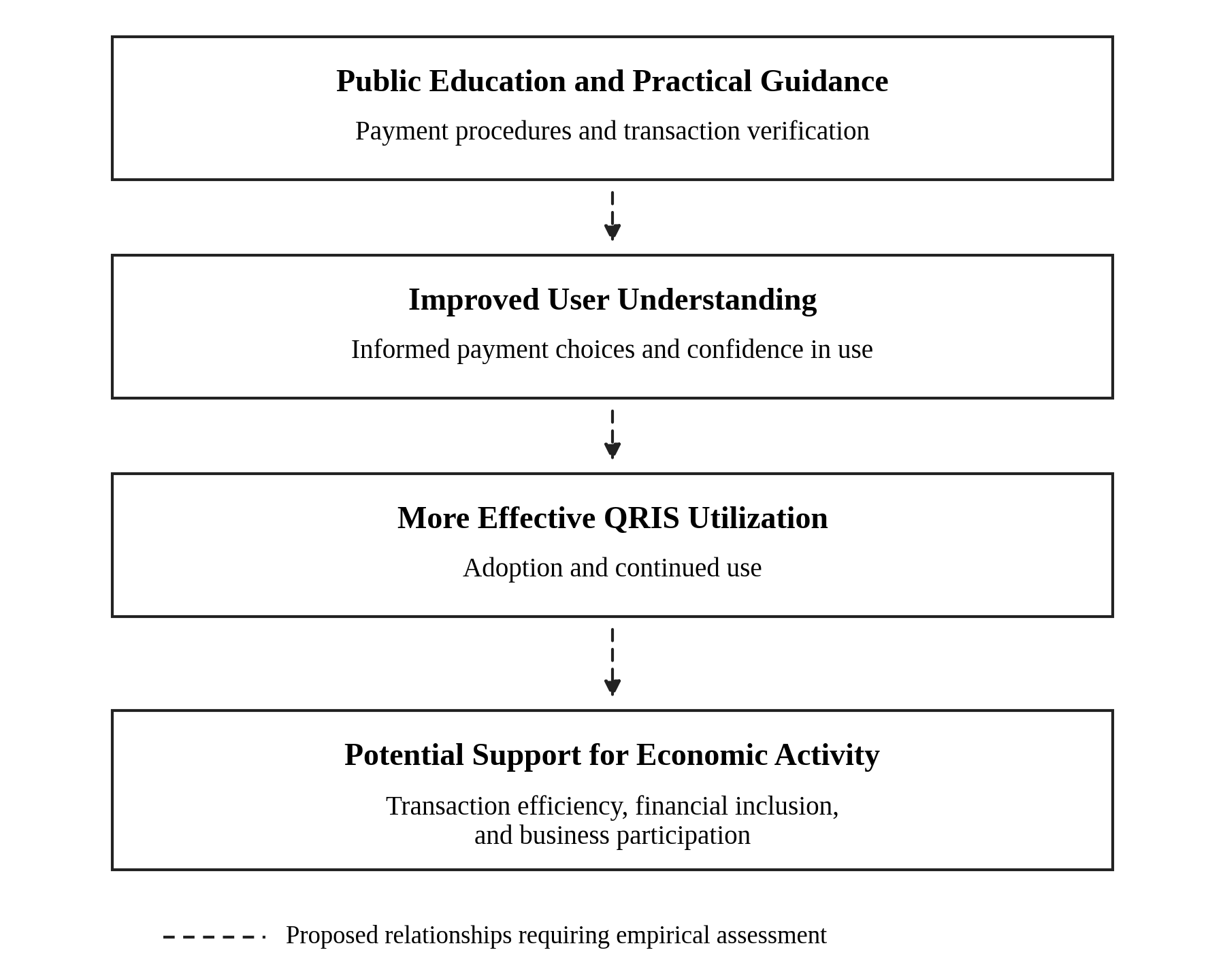
Figure 1. Conceptual Framework for QRIS Optimization and Economic Activity
Source. Authors’ conceptual framework based on reviewed literature
CONCLUSION
This study examined QRIS utilization constraints and optimization strategies through a descriptive qualitative literature review. The analysis identified [principal findings supported by the reviewed evidence]. The findings suggest [evidence-based recommendations], with implications for [relevant stakeholders]. The study contributes by [specific contribution arising from the synthesis]. The review is limited by [source coverage, evidence quality, or analytical limitations]. Future research could assess the effectiveness of [specific intervention] and examine its relationship with QRIS utilization and measurable economic outcomes.
ACKNOWLEDGMENTS AND DECLARATIONS
Where applicable, provide a brief acknowledgment and report funding, competing interests, report on using AI generative tools, ethics approval, and informed consent. Use the details of the actual study.
REFERENCES
The entries below show the APA layout for a journal article and a book. Replace them with sources cited in the manuscript, list them alphabetically, and apply the hanging indent in the journal template.
[Author surname], A. A., & [Author surname], B. B. (Year). Title of the article. Journal Title, volume(issue), page range. https://doi.org/[DOI]
Putra, Y.M. (2018). Pemetaan Penerapan Standar Akuntansi Keuangan EMKM pada UMKM di Kota Tangerang Selatan. Profita: Komunikasi Ilmiah Akuntansi dan Perpajakan, 11(2), 201-217. doi: HTTP://doi.org/10.22441/profita.2018.v11i8.008
[Author surname], C. C. (Year). Title of the book (Edition, if applicable). Publisher.
Putra, Y.M. (2018). Literasi dan Sitasi Karya Ilmiah Berbasis Aplikasi Menggunakan Mendeley. Panduan Penulisan Jurnal Ilmiah, Jakarta: Universitas Mercu Buana
APA Style Journal Article Reporting Standards
For the format of article writing Style Journal Profita: Komunikasi Ilmiah Akutansi dan Perpajakan Author Guidelines and Profita: Komunikasi Ilmiah Akutansi dan Perpajakan Manuscript Template can be downloaded via the following link:
Copyright Notice
Author(s) Rights
As a journal author, you have rights for a large range of uses of your article, including use by your employing institute or company. These author rights can be exercised without the need to obtain specific permission. Authors publishing in Journal of Islamic Economics and Social Sciences (JIESS) journals have wide rights to use their works for teaching and scholarly purposes without needing to seek permission, including use for classroom teaching by the author or the author's institution and presentation at a meeting or conference and distributing copies to attendees; use for internal training by the author's company; distribution to colleagues for their research use; use in a subsequent compilation of the author's works; inclusion in a thesis or dissertation; reuse of portions or extracts from the article in other works (with full acknowledgment of the final article); preparation of derivative works (other than commercial purposes) (with full acknowledgment of the final article); and voluntary posting on open web sites operated by the author or the author's institution for scholarly purposes (should follow CC by SA License).
Authors can copy and redistribute the material in any medium or format, as well as remix, transform, and build upon the material for any purpose, even commercially, but they must give appropriate credit (cite to the article or content), provide a link to the license, and indicate if changes were made. If you remix, transform, or build upon the material, you must redistribute your contributions under the same license as the original.
Retained Rights/Terms and Conditions
Although authors are permitted to reuse all or portions of the work in other works, this does not include granting third-party requests for reprinting, republishing, or other types of reuse.
Copyright Transfer Agreement (for Publishing)
The authors submitting a manuscript do so on the understanding that if accepted for publication, copyright publishing of the article shall be assigned/transferred to the Journal of Islamic Economics and Social Sciences (JIESS) of Universitas Mercu Buana as the publisher of the journal. Upon acceptance of an article, authors will be asked to complete a 'Copyright Transfer Agreement' (see more information on this). An e-mail will be sent to the corresponding author confirming receipt of the manuscript together with a 'Copyright Transfer Agreement' form by the online version of this agreement.
Journal of Islamic Economics and Social Sciences (JIESS) of Universitas Mercu Buana, the editors and the advisory editorial board make every effort to ensure that no wrong or misleading data, opinions or statements be published in the journal. In any way, the contents of the articles and advertisements published in the Journal of Islamic Economics and Social Sciences (JIESS) are the sole and exclusive responsibility of their respective authors and advertisers.
Remember, even though we ask for a transfer of copyright, our journal authors retain (or are granted back) significant scholarly rights as mentioned before.
The Copyright Transfer Agreement (CTA) Form can be downloaded here:
[Copyright Transfer Agreement (CTA) Form Journal of Islamic Economics and Social Sciences (JIESS)]
The copyright form should be signed electronically and sent to the Editorial Office in the form of the original e-mail below:
Journal of Islamic Economics and Social Science (JIESS)
Ikatan Ahli Ekonomi Islam (IAEI)
Komisariat: Universitas Mercu Buana
Faculty of Economic and Business Building
Jl. Raya Meruya Selatan, Kembangan, Jakarta-11650
Telp.021-5840816 Ext. 5342, Fax. 021-5871312
Email: [email protected].
Website: http://publikasi.mercubuana.ac.id/index.php/jiess
All off articles in the Journal of Islamic Economics and Social Sciences (JIESS) are licensed under CC BY-SA.

Journal of Islamic Economics and Social Sciences (JIESS) and the article are licensed under a Creative Commons Attribution-ShareAlike 4.0 International License.